
Horses That Roar and How To Avoid Tie Back Surgery
Share This Post:
What do you do when your horse struggles to breathe during exercise and the next recommended step is surgery? Could looking beyond the airway reveal other physical patterns worth addressing too?
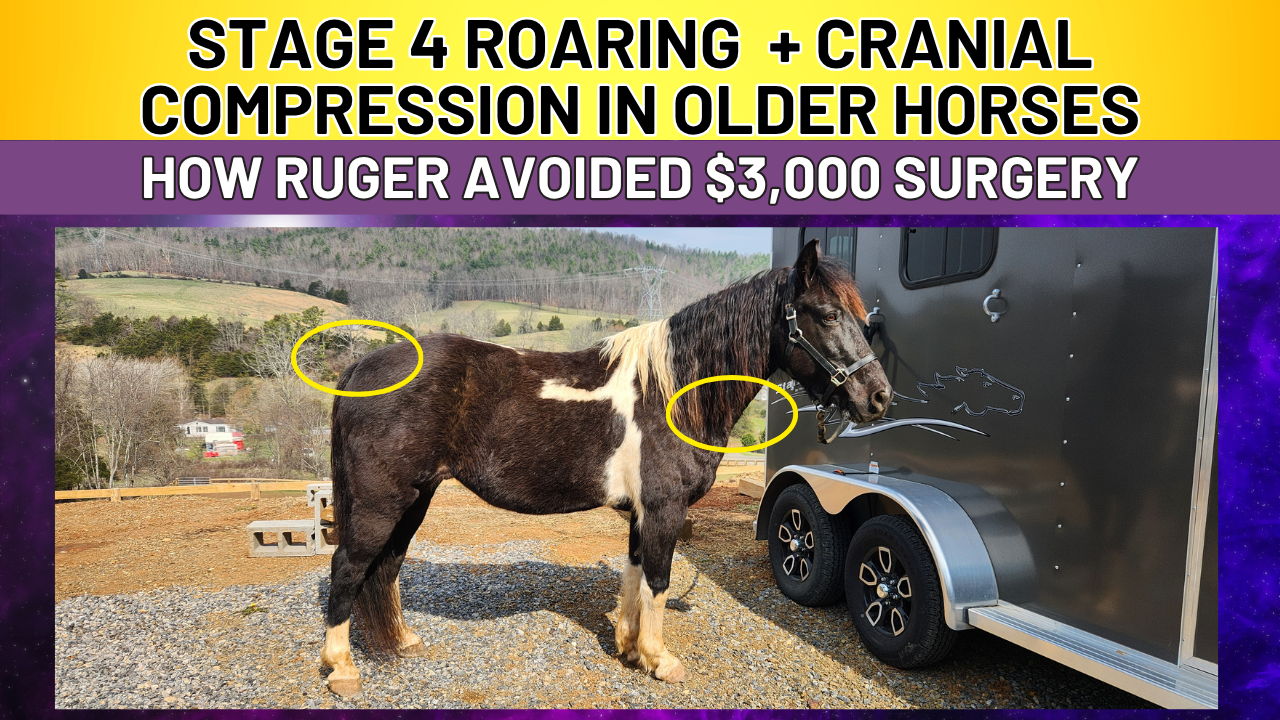
Ruger is an 11-year-old Kentucky Mountain Horse who couldn’t comfortably handle hills. Even after losing excess weight and becoming fitter, uphill work left him struggling for air, with a long recovery before his breathing returned to normal.
A veterinary scope revealed the reason: Ruger was diagnosed with grade-three roaring, with his owner reporting approximately 90% loss of movement in the left cartilage responsible for opening his airway. A tie-back surgery costing around $3,000 was being considered.
But before moving forward, Ruger’s owner Ruth began working with April Love’s Holistic Horseworks whole-horse approach.
In this episode of Holistic Horseworks Live, April evaluates Ruger from head to hoof and explores the physical patterns she believes deserve attention alongside his diagnosed breathing condition, including cranial compression, the laryngeal nerve, first-rib alignment, ribs, pelvis, posture, hoof balance, and overall movement.
What Is Roaring in Horses?
Roaring is commonly associated with dysfunction of the larynx that can interfere with a horse’s ability to move enough air during exercise.
In Ruger’s case, his owner initially believed his difficult breathing was related to being overweight. After she helped him lose weight and began conditioning him, it became clear that something else was happening.
He could work comfortably on flat ground, but climbing hills quickly left him out of breath. Veterinary scoping then identified significant loss of movement in the left cartilage involved in opening the airway.
April uses Ruger’s case to explore a question that runs throughout the episode:
When a horse has a diagnosed problem in one area, what else might be happening throughout the body?
Roaring, the Laryngeal Nerve and Cranial Compression
A major focus of April’s evaluation is the left side of Ruger’s head and neck.
April discusses the path of the laryngeal nerve and explains her observation that horses she has worked with for roaring have also shown patterns she interprets as cranial compression on the left side.
She connects this with her assessment of the head, throatlatch and left first-rib region.
April also shares the story of another horse with advanced roaring that she previously worked with. She describes using her Level 3 bodywork, laser therapy and other supportive approaches and says that horse improved enough to return to light riding without undergoing the planned tie-back surgery.
These are April’s observations and experiences rather than a replacement for veterinary diagnosis or treatment, but they explain why she wanted to evaluate more than Ruger’s airway alone.
Why April Checks the First Rib
The first rib becomes another important part of Ruger’s evaluation.
Before this live episode, Ruth had already worked with April over Zoom. Together they worked on Ruger’s hips, pelvis, ribs and first rib.
By the time of the live evaluation, April notes that Ruger is standing considerably more squarely than he had in his earlier photographs.
April explains that when she identifies a first-rib imbalance, she also looks at how freely the shoulder can move and whether the horse has developed compensation through surrounding muscles and the rest of the body.
This is central to the Holistic Horseworks approach: don’t stop evaluating simply because you’ve found the place where the most obvious symptom appears.
What Horse Yoga Can Reveal About the Body
Ruger’s owner had also begun using April’s horse yoga exercises.
During the episode, April has Ruth demonstrate a belly lift and explains what she watches for as Ruger raises his back and engages through his ribs.
April uses several simple movements as observational tools:
- Neck stretches to assess how freely the neck moves
- Front-leg circles to observe the ribs and withers
- Tail pulls and butt tucks to evaluate the pelvis
- Belly lifts to observe the ribs, intercostal area and back
Her approach is that difficulty performing a movement comfortably may give an owner another area to investigate.
For performance horses, she discusses using these exercises before, during and after work as part of her routine for keeping the body moving freely.
First Rib, Shoulders and Movement
April also spends time discussing the first rib and shoulder area, an important part of her Holistic Horseworks approach.
She explains what she looks for when a horse has differences between the shoulders, front legs, hoof loading, or movement patterns.
In Stetson’s case, this becomes part of a much larger evaluation that includes both his front and hind end rather than treating his previous lameness as an isolated leg problem.
The episode allows viewers to see how April follows these patterns through the body and why she believes addressing multiple connected areas can be important when a horse has experienced recurring issues.
Cranial Balance, TMJ and the Rest of the Horse
April also examines Ruger’s head, including his eyes and facial symmetry, and discusses what she interprets as cranial compression.
Later in the episode, she explains why her advanced approach considers the TMJ, chewing, teeth, cranial structures, pelvis and skeletal balance together.
For April, getting one area to change isn’t necessarily enough if the horse continues compensating somewhere else. She wants the horse standing and moving more evenly throughout the entire body.
This is also why the episode touches on previous trauma and experiences such as pulling back and trailering. April encourages owners to think about a horse’s physical history rather than focusing only on what is happening today.
Can Equine Roaring Be Managed Without Surgery?
Ruger’s story does not establish that every horse with roaring can or should avoid surgery.
Roaring can significantly affect breathing and performance, and horses with respiratory problems need appropriate veterinary assessment. Ruger’s diagnosis itself came from veterinary scoping.
What this episode provides is a look at the additional areas April chooses to evaluate while Ruth explores her options for Ruger.
The episode follows their work on his first rib, ribs, pelvis, posture, cranial structures, hooves and overall body balance, while documenting the changes Ruth is seeing along the way.
At the time of this episode, Ruger’s story is still unfolding.
That makes the full evaluation particularly interesting to watch.
Watch Ruger’s Full Horse Roaring Evaluation
If your horse has been diagnosed with roaring, laryngeal dysfunction, exercise intolerance or breathing problems, or you’ve noticed recurring issues with posture, hoof balance, shoulder movement or body stiffness, Ruger’s story offers a different perspective on looking at the horse as a whole.
Watch April evaluate Ruger’s breathing concerns, cranial structures, first rib, shoulders, ribs, pelvis, hooves and movement, and see the techniques Ruth has already begun using at home.
Watch the full episode to follow Ruger’s journey and see why April believes horse owners should look from head to hoof rather than focusing only on the most obvious symptom.
You’ll also get a glimpse into April’s signature Holistic Horseworks programs, clinics, and free resources—including the Horse 101 eBook and dozens of YouTube tutorials.
🍎 Ready to Start Helping Your Horse?
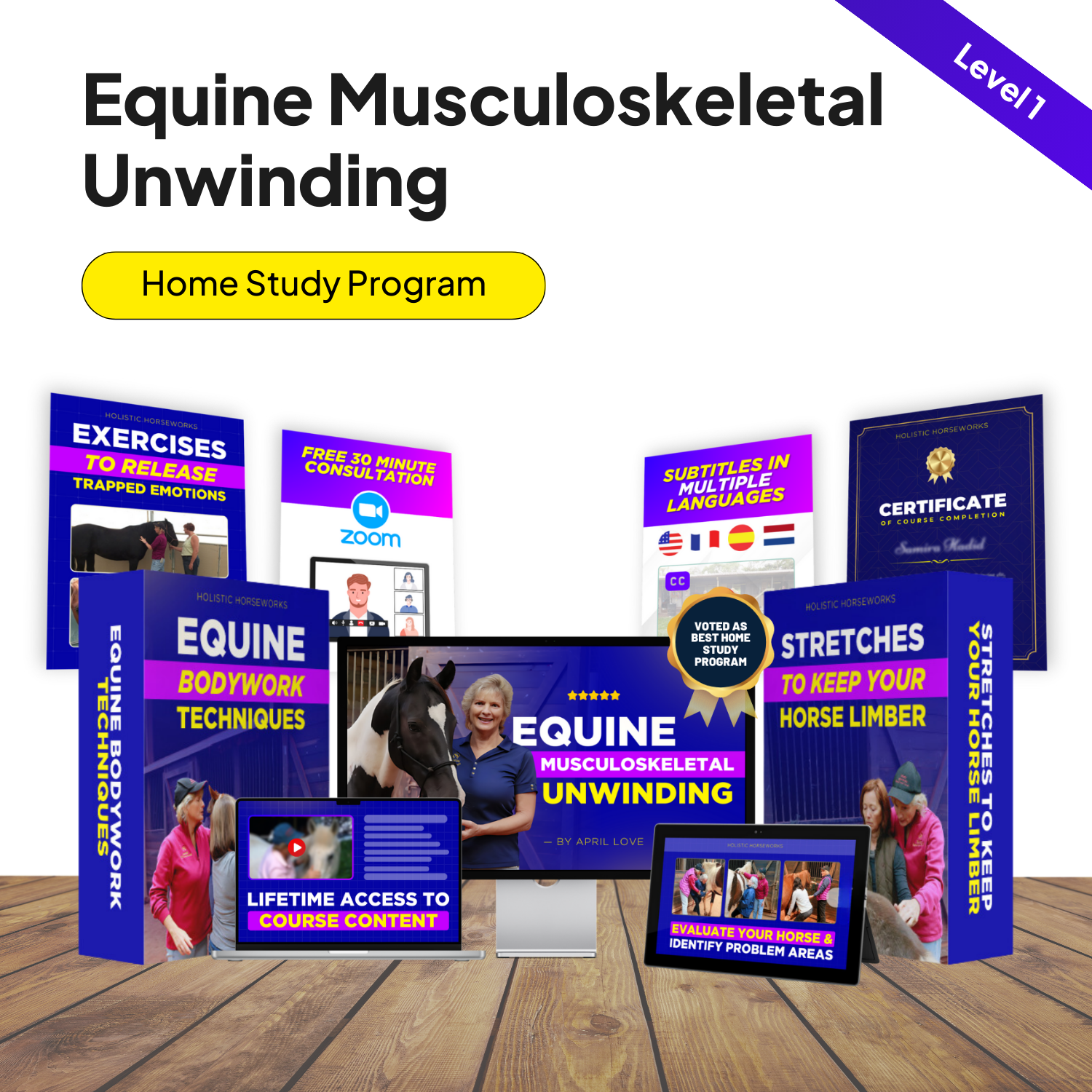
Start with April’s foundational training, Equine Musculoskeletal Unwinding, available to learn online with live 1:1 support. This step-by-step course teaches you how to release deep patterns of imbalance and pain—so your horse can move, feel, and live better.
Whether your horse is showing signs of discomfort or you simply want to deepen your connection and care, this program puts powerful tools in your hands.
Includes video lessons, downloadable workbooks, and a personalized distance reading from April herself.
Rather learn in-person?
Check out our hands-on equine remedial therapy clinics, available all over the globe →
More Holistic Horse Care Education

Your Health Now: August 19th, 2026
What could your dog’s itching, allergies, vision problems, stiff joints, or changes in movement be telling you about their overall health?
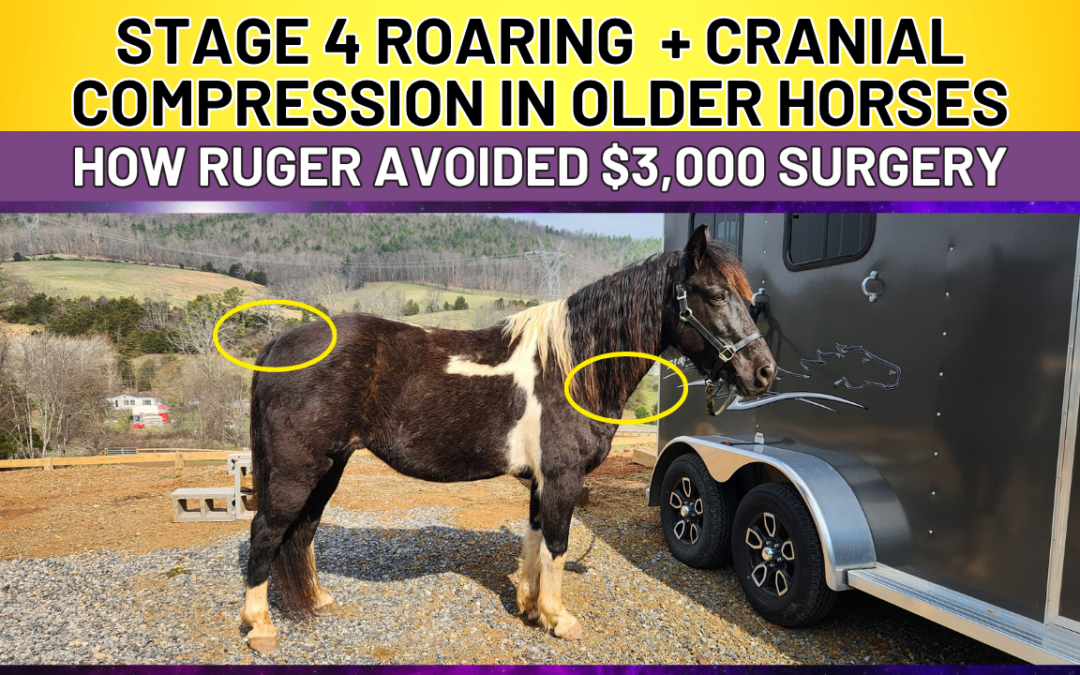
Horses That Roar and How To Avoid Tie Back Surgery
Ruger struggled to breathe on hills and was diagnosed with grade-three roaring, with surgery being considered. Watch April Love evaluate his cranial structures, first
How to Keep Your Horse Healthy, Sound & Rideable for Life
From a 30-year-old endurance horse recovering from a sudden illness to a 10-year-old horse with years of unexplained lameness, pain, hoof problems, biting, and
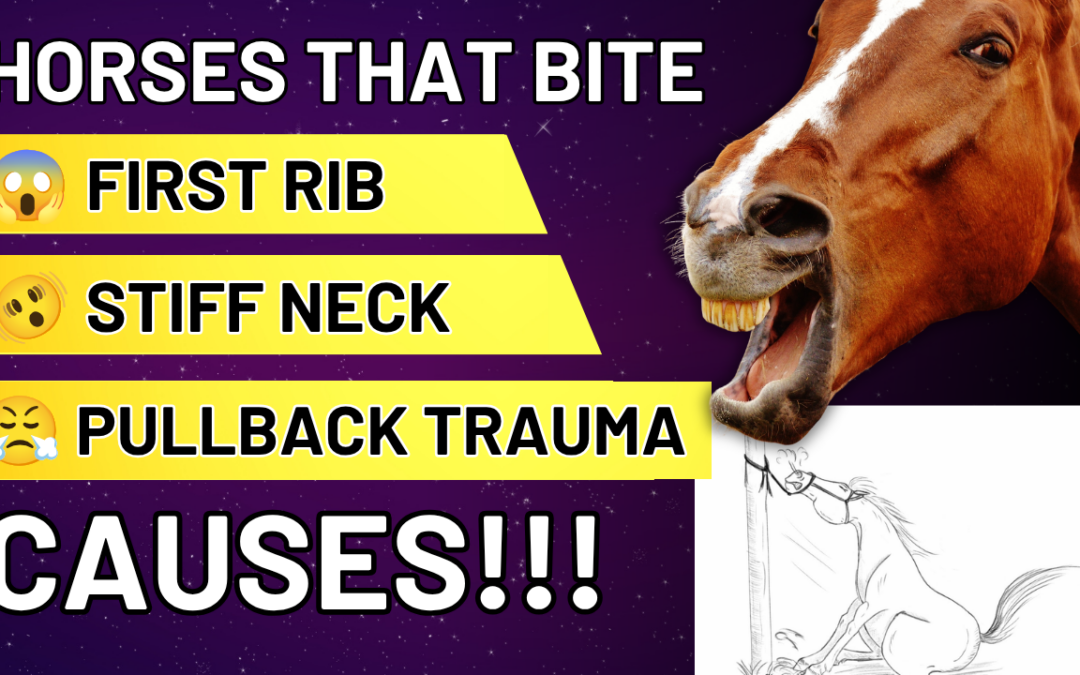
Why Your Horse’s Neck is Stiff: Pullback Trauma & the First Rib
Why does your horse have a stiff neck, bite when saddled, or keep developing problems elsewhere in the body? Watch April Love evaluate two
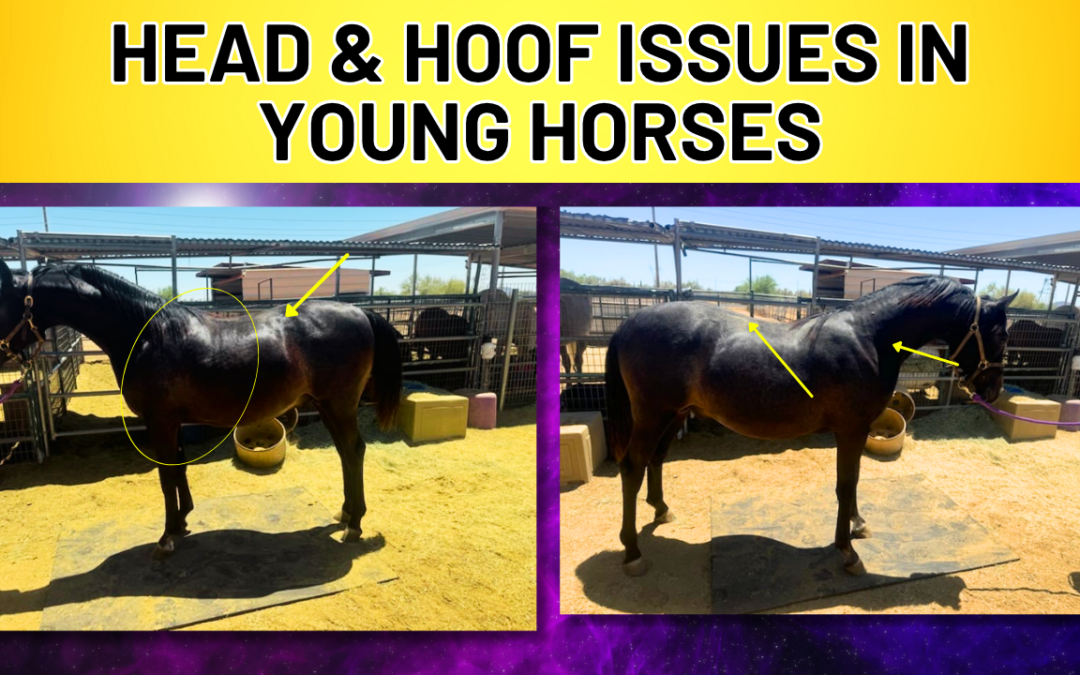
Young Horse Care: Hoof Imbalances, Cranial Compression, Posture & Behavior
Why does your young horse toss their head, stand unevenly, or develop high-low hooves? Watch April Love evaluate two young horses and explore how
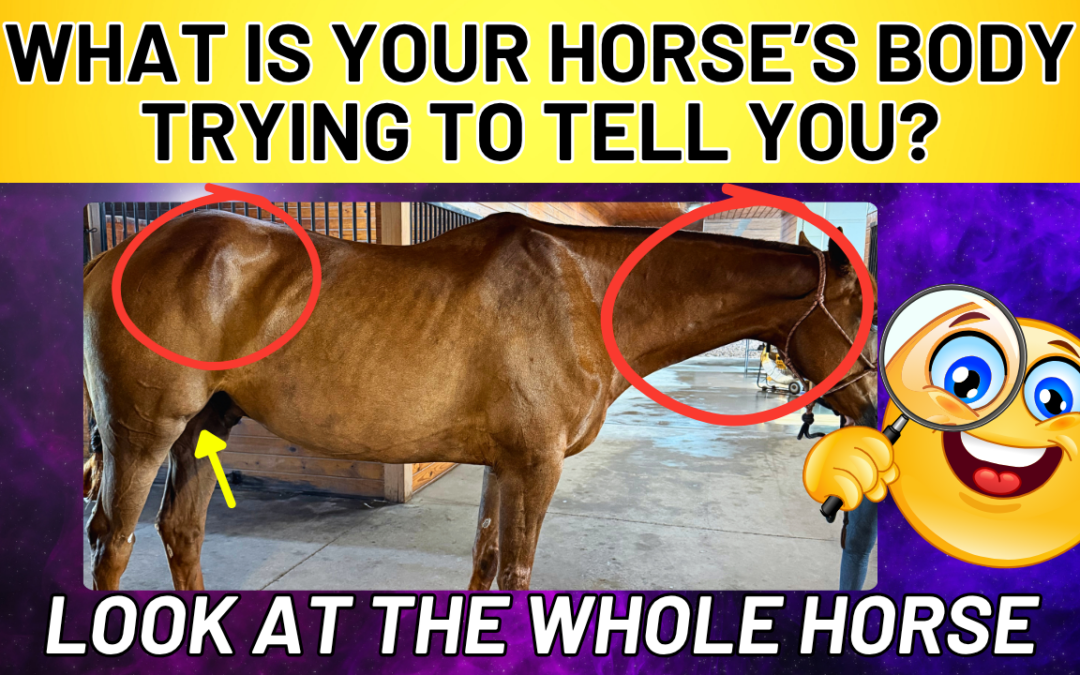
Why Your Horse’s Lameness, Spooking & Hoof Problems Keep Coming Back
Is your horse dealing with recurring lameness, spooking or hoof problems? Watch April Love explain how body imbalances and compensation patterns may be connected.
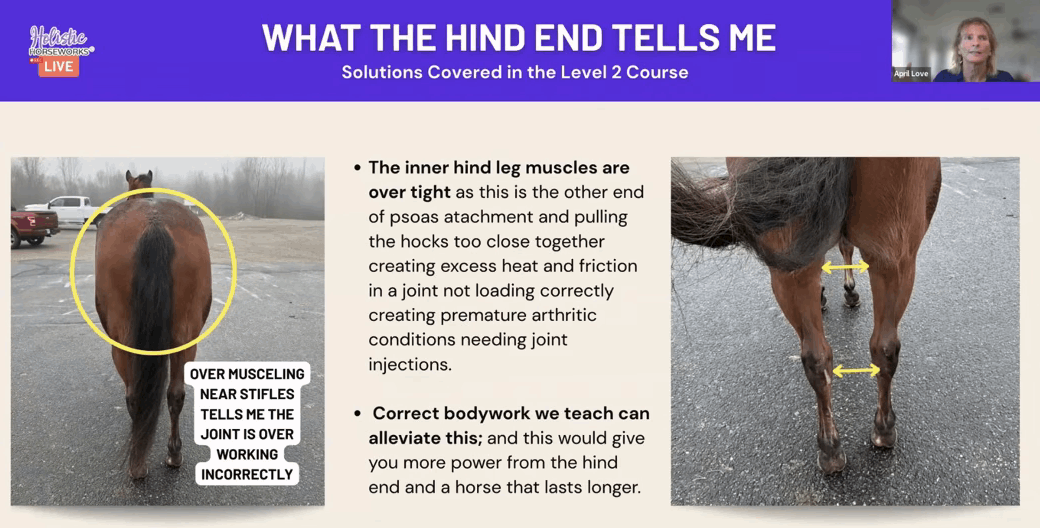
Your Health Now: May 27th, 2026
Chronic pain, nerve issues, jaw tension, recurring soreness, hormone imbalance, and fatigue often seem like separate problems. But what if they're connected? In this episode
Stetson’s Transformation: What Aggressive Horses May Be Trying to Tell You
Pinned ears, biting, kicking, and explosive reactions are often labeled as behavior problems, but what if the horse is actually in pain? In this
How Tiki Is Still Trail Riding at 30: Holistic Horse Care, Craniosacral Work, and Supporting Senior Horses Naturally
Most horse owners expect horses to slow down dramatically with age, but Tiki is still lightly trail riding at 30. In this Holistic Horseworks
Sign Up for Our Newsletter

![Complete Level 1 & Level 2 Home Study + Private Training Package [NO DVD]](https://holistichorseworks.com/wp-content/uploads/2022/08/Level-1-and-Level-2-complete-home-study-and-training-package-400x400.jpg)
![Level 1 "Equine Musculoskeletal Unwinding" Home Study -Watch Instantly [NO DVD]](https://holistichorseworks.com/wp-content/uploads/2022/08/Level-1-Home-Study-400x400.jpg)
![Level 2 “CranioSacral Unwinding & Advanced Applied Kinesiology” Home Study - Watch Instantly [NO DVD]](https://holistichorseworks.com/wp-content/uploads/2022/08/Level-2-Home-Study-400x400.jpg)
![Equine CranioSacral Energy Work -Watch Instantly [English and French]](https://holistichorseworks.com/wp-content/uploads/2022/09/equine-cranial-sacral-energy-work-watch-instantly-400x400.jpg)