
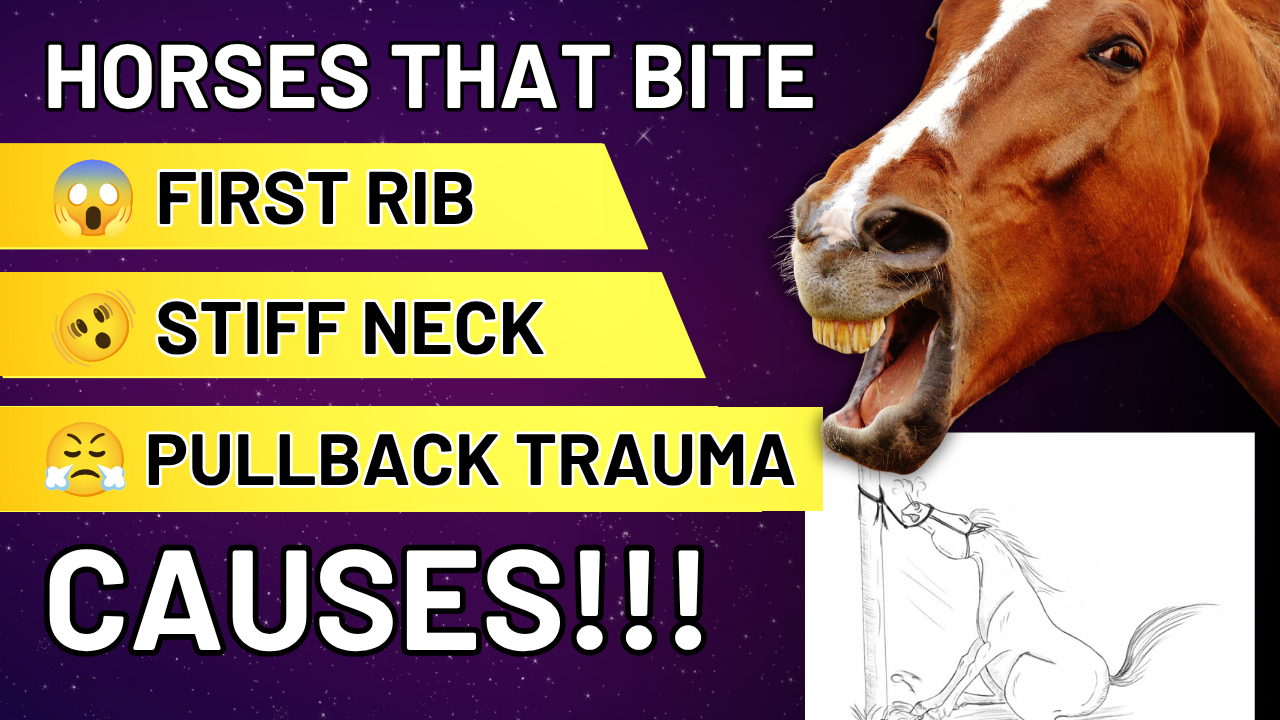
Why Your Horse’s Neck is Stiff: Pullback Trauma & the First Rib
Share This Post:
Does your horse have a stiff neck that keeps returning, even after bodywork or chiropractic care? Do they bite when you tighten the girth, resist saddling, stand unevenly, or develop recurring hoof and lameness problems?
In this episode of Holistic Horseworks Live, April Love evaluates two very different horses and explores how neck stiffness, previous pullback trauma, first rib restrictions, girth sensitivity, posture, hoof imbalance, and hind-end problems may fit into a larger whole-body pattern.
One horse is a 27-year-old Icelandic mare who bites during saddling and reacts around her girth and chest. The other is a former reining horse with neck stiffness, hind-end problems, navicular changes, and signs April interprets as evidence of previous pullback trauma.
Watch the full episode as April works from head to hoof, showing what she checks around the neck, first ribs, shoulders, sternum, pelvis, TMJ, legs, and hooves and why she believes the location of the symptom may not be the whole story.
When “Bad Behavior” May Be Your Horse’s Response to Discomfort
The first horse, Kate, is a 27-year-old Icelandic mare who still enjoys being ridden. But she bites when being saddled, reacts around her girth and chest, and paws frequently.
It would be easy to label those behaviors as attitude or training problems.
April looks at them differently.
During the evaluation, Kate reacts when pressure is applied around her sternum and pectoral area. April explains why she considers discomfort and previous physical trauma when a normally willing horse suddenly reacts to being touched, saddled, or girthed.
This is one of the central messages of the episode: before assuming a horse is simply being difficult, pay attention to when and where the behavior happens.
Biting during saddling, pawing, resisting touch, reluctance to move, or difficulty performing a particular movement may provide clues worth investigating.
Horse Posture, Back Tension and Hind-End Imbalance
Kate also appears croup-high or “butt high,” but April questions whether what viewers are seeing is actually conformation.
During the live evaluation, pressure near the top of Kate’s pelvis produces visible muscle spasms through her lower back. April describes what she sees as a pelvic and muscular pattern affecting the way Kate holds her hind end and explains why she considers this posture rather than simply the horse’s natural conformation.
From there, the discussion expands into the lower back, pelvis, psoas region, hocks, stifles and hoof loading.
April’s approach is to follow the pattern through the horse instead of stopping at the location where the symptom appears.
What Uneven Hooves May Reveal About the Body
The hooves are a major part of both evaluations.
April examines how each horse stands, how the legs line up, which parts of the hoof are being loaded, and whether the heels and hoof walls are developing evenly.
With Kate, she connects the hoof patterns she observes with what she has already seen higher in the body, including the sternum, pectoral region, shoulders, lower back and hind end. She encourages owners not to focus only on repeatedly cutting, trimming or reshaping an uneven hoof without also asking why the horse continues to load that foot differently.
That same idea becomes even more important with the second horse.
Neck Stiffness, Pullback Trauma and the First Rib
Ice is almost nine years old. He began his career as a reining horse and is now used for ranch riding. His owner reports left-hind problems, neck stiffness and veterinary findings of navicular changes.
April begins by looking beyond the areas already identified as problems.
She examines the shape and musculature of Ice’s neck and discusses what she interprets as signs of previous pullback trauma. She also evaluates his first ribs, shoulders, poll, head, TMJ and cranial symmetry.
The episode explores April’s view of how unresolved patterns in the head, neck, first ribs and shoulders can affect the way a horse carries and uses the rest of the body.
For owners whose horses repeatedly become stiff through the neck or struggle to move comfortably despite previous treatments, this section provides a different perspective on where to look next.
Contracted Heels, Hoof Balance and Navicular Changes
Ice’s feet become another major focus of the evaluation.
April points out his contracted heels and discusses how shoeing, hoof expansion, stance, loading patterns and problems higher in the body can influence what owners eventually see at ground level. Ice had already been found to have navicular changes in both front feet and had experienced lameness.
April then shares her approach to contracted heels, hoof soaking, transitioning toward barefoot where appropriate, hoof conditioning, and giving the hoof time to change. She also discusses why she believes owners should prepare a hoof before simply removing shoes.
The broader lesson isn’t simply about shoes versus barefoot.
It’s about asking why the hoof developed its current shape and considering the horse standing above it.
Your Horse’s Head, Eyes, TMJ and Teeth Matter Too
The episode doesn’t stop at the musculoskeletal system.
April closely examines both horses’ faces, including the eyes, nostrils, ears, poll, TMJ and chewing muscles.
With Ice, she points out asymmetry between the eyes and nostrils and discusses how she evaluates these patterns alongside a horse’s history of head or pullback trauma. She also explores her approach to TMJ movement, chewing patterns and dental wear.
Later, April discusses what she watches for when a horse has a weepy or irritated eye, facial asymmetry, spooking, difficulty chewing normally, or feels different from one rein to the other.
These are all pieces of the same whole-horse evaluation.
First Rib, Shoulders, Pelvis, Hooves
A recurring message throughout this episode is that the location of the symptom isn’t necessarily the only area April wants to examine.
A horse may show:
- Girth sensitivity or biting
- Pawing or resistance during saddling
- Neck stiffness
- Difficulty with one canter lead
- Uneven posture or inability to stand square
- High-low or uneven hooves
- Contracted heels
- Stifle or hind-end problems
- Recurring lameness
- Spooking or eye problems
- TMJ or chewing changes
Rather than viewing these signs independently, April works from head to hoof, looking for patterns in how the entire horse stands, moves and compensates.
This is also why she encourages owners to regularly observe their horses before problems become severe. She explains that when a comfortable horse stops naturally and stands, she expects the front feet and hind feet to be positioned evenly, apart from a relaxed hind leg. Changes in that normal stance can be one clue that something deserves attention.
Keeping Horses Healthy, Sound and Rideable as They Age
There’s another important message running through this episode: longevity.
Kate is 27 and still being ridden. April also shares the story of her endurance horse Tiki, who accumulated thousands of miles and was still being lightly ridden around age 30. Her philosophy is to notice small changes in a horse’s body and address them instead of waiting for them to develop into larger performance problems.
That philosophy is at the heart of Holistic Horseworks Live: helping owners learn to look at the whole horse and recognize patterns that may otherwise be dismissed as age, conformation, behavior, or an isolated hoof or joint problem.
Watch the Full Holistic Horseworks Live Episode
If your horse has recurring lameness, girth sensitivity, uneven hooves, contracted heels, navicular changes, neck stiffness, back tension, trouble standing square, spooking, or unexplained behavioral changes, this episode gives you an opportunity to watch April work through two very different horses in real time.
You’ll see how she evaluates the head, eyes, TMJ, teeth, neck, first ribs, sternum, shoulders, spine, pelvis, hind end, legs, posture and hooves, while explaining the connections she looks for throughout the horse.
Watch the full episode to see April’s whole-horse evaluations and learn how to start looking beyond individual symptoms.
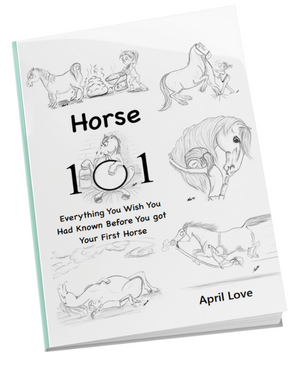
You’ll also get a glimpse into April’s signature Holistic Horseworks programs, clinics, and free resources—including the Horse 101 eBook and dozens of YouTube tutorials.
🍎 Ready to Start Helping Your Horse?
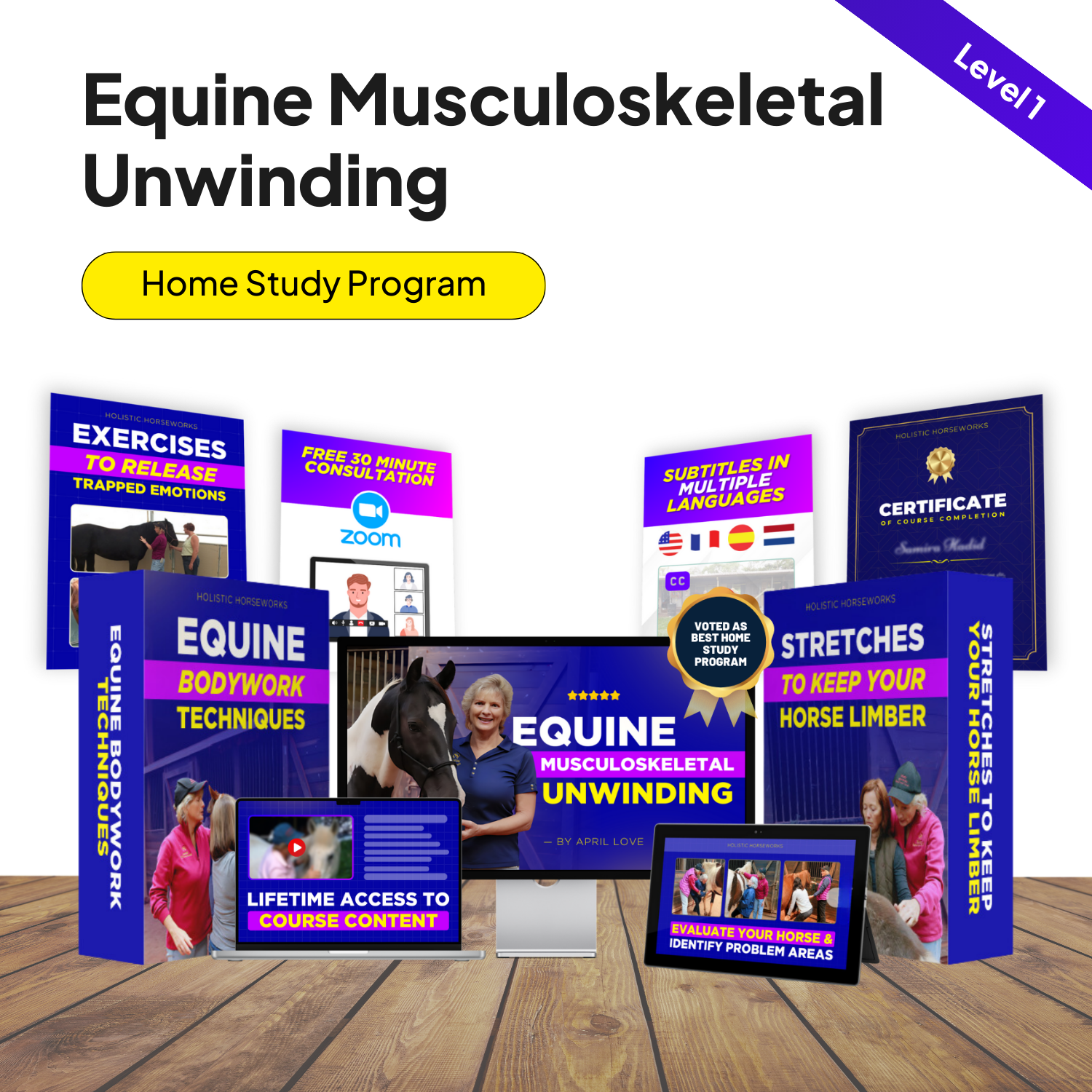
Start with April’s foundational training, Equine Musculoskeletal Unwinding, available to learn online with live 1:1 support. This step-by-step course teaches you how to release deep patterns of imbalance and pain—so your horse can move, feel, and live better.
Whether your horse is showing signs of discomfort or you simply want to deepen your connection and care, this program puts powerful tools in your hands.
Includes video lessons, downloadable workbooks, and a personalized distance reading from April herself.
Rather learn in-person?
Check out our hands-on equine remedial therapy clinics, available all over the globe →
More Holistic Horse Care Education

Your Health Now: August 19th, 2026
What could your dog’s itching, allergies, vision problems, stiff joints, or changes in movement be telling you about their overall health?
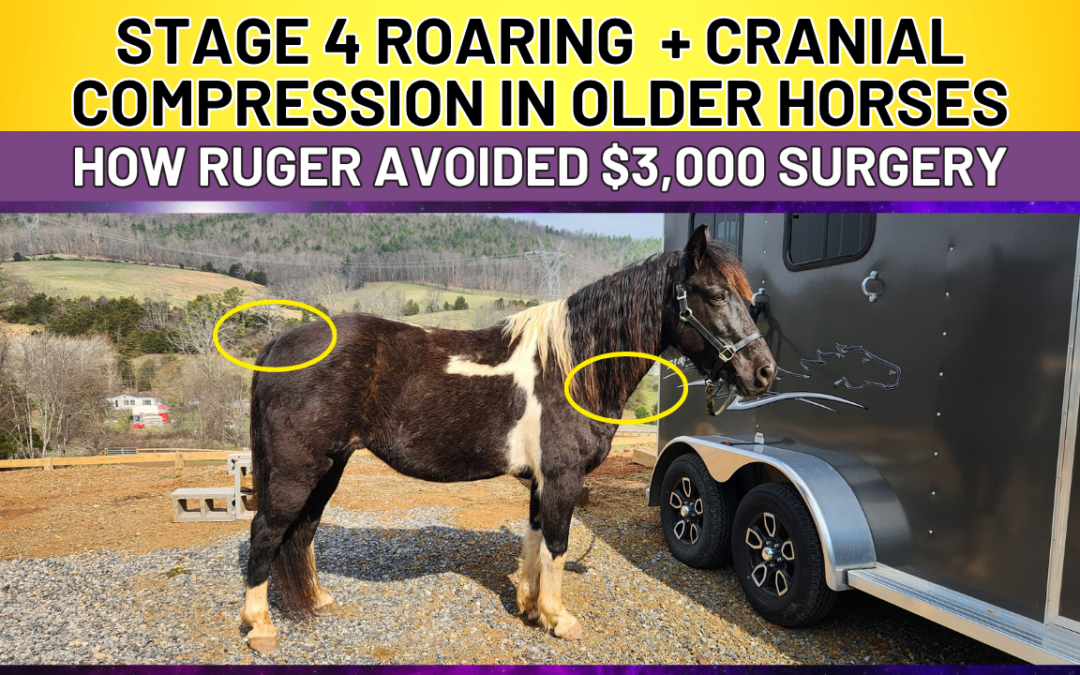
Horses That Roar and How To Avoid Tie Back Surgery
Ruger struggled to breathe on hills and was diagnosed with grade-three roaring, with surgery being considered. Watch April Love evaluate his cranial structures, first
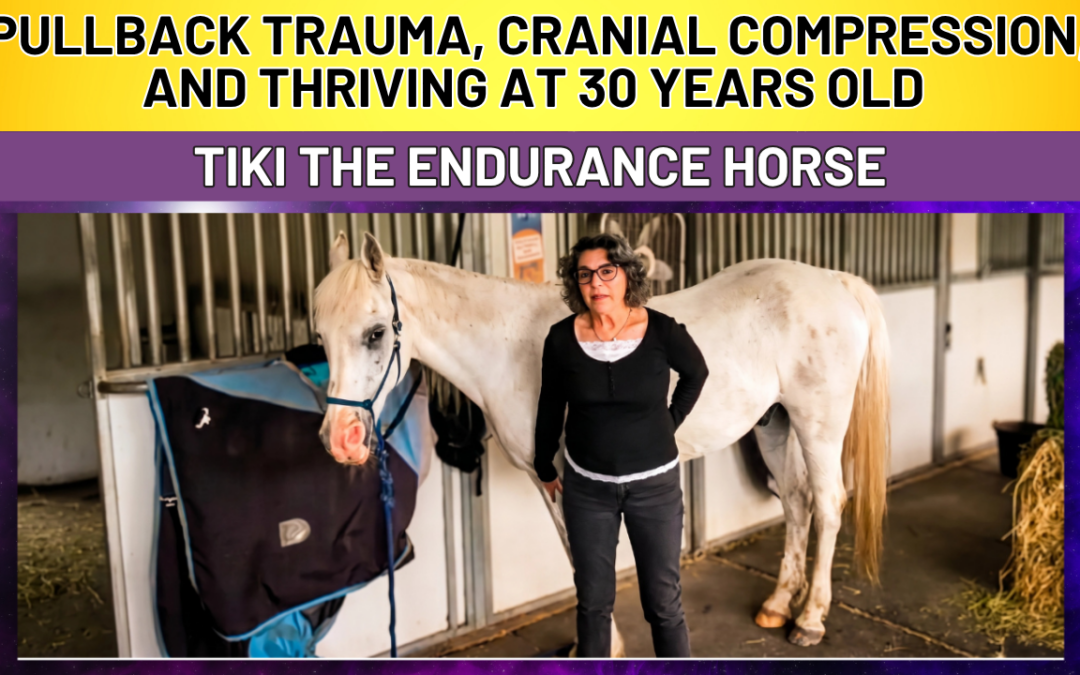
How to Keep Your Horse Healthy, Sound & Rideable for Life
From a 30-year-old endurance horse recovering from a sudden illness to a 10-year-old horse with years of unexplained lameness, pain, hoof problems, biting, and
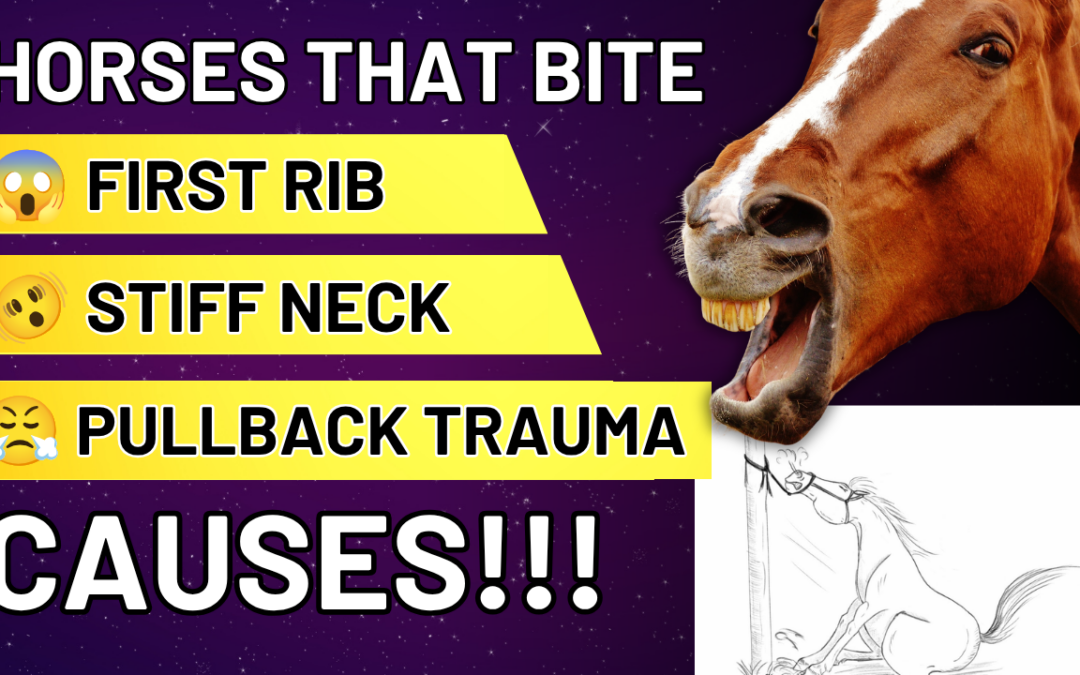
Why Your Horse’s Neck is Stiff: Pullback Trauma & the First Rib
Why does your horse have a stiff neck, bite when saddled, or keep developing problems elsewhere in the body? Watch April Love evaluate two
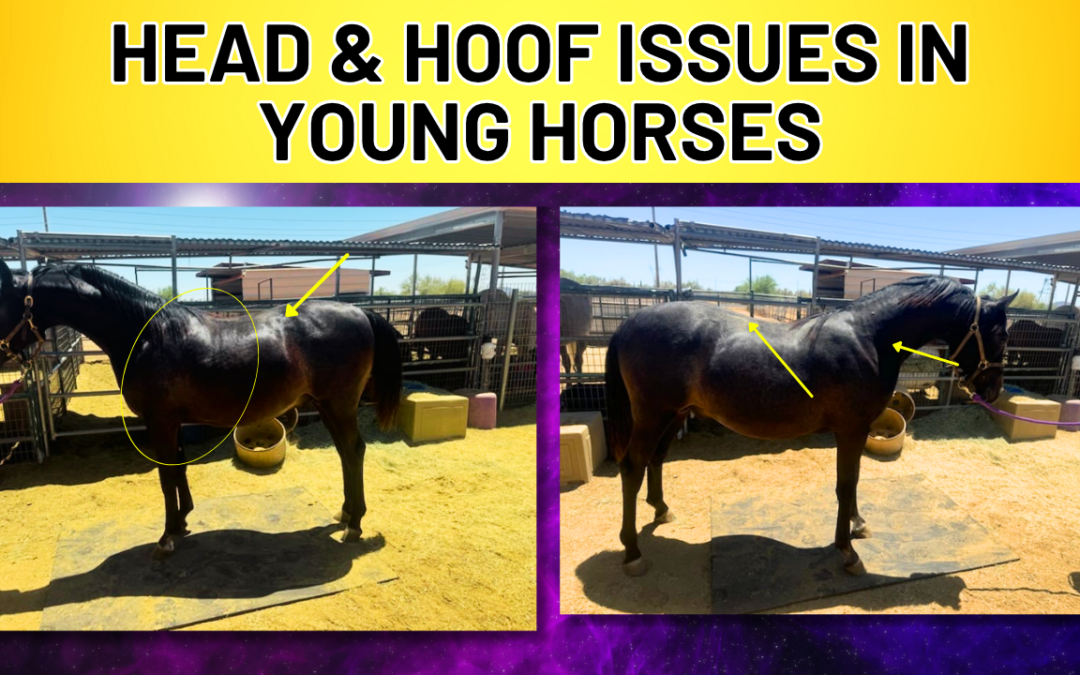
Young Horse Care: Hoof Imbalances, Cranial Compression, Posture & Behavior
Why does your young horse toss their head, stand unevenly, or develop high-low hooves? Watch April Love evaluate two young horses and explore how
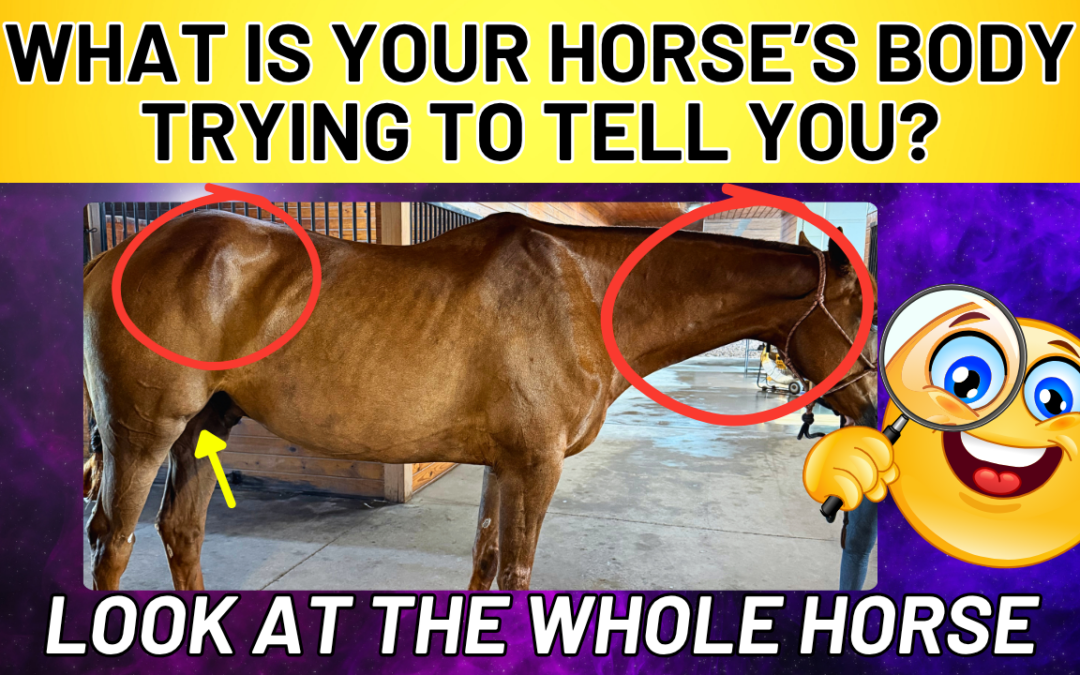
Why Your Horse’s Lameness, Spooking & Hoof Problems Keep Coming Back
Is your horse dealing with recurring lameness, spooking or hoof problems? Watch April Love explain how body imbalances and compensation patterns may be connected.
Your Health Now: May 27th, 2026
Chronic pain, nerve issues, jaw tension, recurring soreness, hormone imbalance, and fatigue often seem like separate problems. But what if they're connected? In this episode
Stetson’s Transformation: What Aggressive Horses May Be Trying to Tell You
Pinned ears, biting, kicking, and explosive reactions are often labeled as behavior problems, but what if the horse is actually in pain? In this
How Tiki Is Still Trail Riding at 30: Holistic Horse Care, Craniosacral Work, and Supporting Senior Horses Naturally
Most horse owners expect horses to slow down dramatically with age, but Tiki is still lightly trail riding at 30. In this Holistic Horseworks
Sign Up for Our Newsletter
![Complete Level 1 & Level 2 Home Study + Private Training Package [NO DVD]](https://holistichorseworks.com/wp-content/uploads/2022/08/Level-1-and-Level-2-complete-home-study-and-training-package-400x400.jpg)
![Level 1 "Equine Musculoskeletal Unwinding" Home Study -Watch Instantly [NO DVD]](https://holistichorseworks.com/wp-content/uploads/2022/08/Level-1-Home-Study-400x400.jpg)
![Level 2 “CranioSacral Unwinding & Advanced Applied Kinesiology” Home Study - Watch Instantly [NO DVD]](https://holistichorseworks.com/wp-content/uploads/2022/08/Level-2-Home-Study-400x400.jpg)
![Equine CranioSacral Energy Work -Watch Instantly [English and French]](https://holistichorseworks.com/wp-content/uploads/2022/09/equine-cranial-sacral-energy-work-watch-instantly-400x400.jpg)