
How to Keep Your Horse Healthy, Sound & Rideable for Life
Share This Post:
What does it take to keep a horse healthy, comfortable, sound, and rideable for as many years as possible? And when lameness, hoof problems, pain, or behavior changes appear, how do you know whether you’re addressing the real source or simply managing another symptom?
In this episode of Holistic Horseworks Live, April Love shares two very different stories that come back to the same goal: helping horses feel their best throughout their lives.
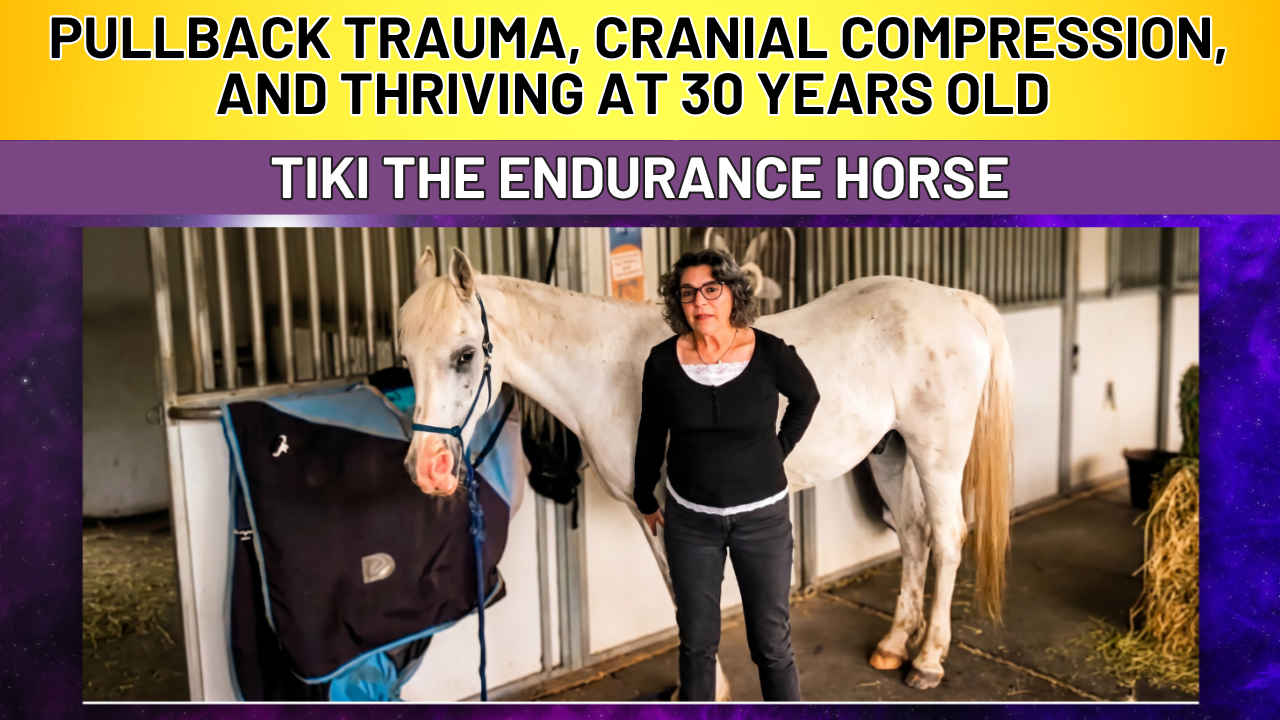
First, April checks in on Tiki, her former endurance horse and “heart horse,” who is now 30 years old and still being lightly ridden. After Tiki suddenly developed a high fever, stopped eating and drinking, and became seriously ill, his owner Chris worked with veterinary care while also reaching out to April for additional holistic support. April shares what she recommended during his recovery and why she believes horse owners should have supportive tools and resources available before an illness or emergency occurs.
Then the episode turns to Stetson, a 10-year-old horse whose owner, Tia, spent years trying to understand his lameness, weakness, body sensitivity, hoof problems, difficulty with one lead, biting, and kicking.
Together, their stories explore a much bigger question: What changes when you stop looking at one symptom at a time and start evaluating the whole horse?
Keeping a Senior Horse Healthy, Active and Rideable
Tiki’s story is particularly meaningful because of his age.
At 30, he has a long history as an endurance horse and is still being lightly ridden. April discusses the work she has done with him throughout his life and shares her philosophy of noticing physical changes early instead of waiting until they become major limitations.
When Tiki suddenly became ill, however, the challenge was different.
He developed a high fever, stopped eating and drinking, and became weak enough that his owner was concerned about losing him. Alongside veterinary involvement, Chris contacted April, who suggested several supportive approaches she uses in her holistic horse care practice.
His recovery opens a wider conversation about senior horse care, immune support, nutrition, hydration, recovery, and being prepared when a horse’s health suddenly changes.
Tiki’s story also supports one of April’s biggest goals for horse owners: don’t wait until your horse is old or struggling before becoming proactive about their health.
When Years of Horse Lameness Don’t Give You Answers
Stetson’s story begins at the opposite end of the spectrum.
He is only 10, yet his owner had already spent years trying to determine why he wasn’t comfortable.
Tia describes unexplained front-leg weakness, hind-end lameness, muscle tension, hoof cracking, difficulty with his right lead, and extreme sensitivity to touch. At one point, Stetson was so uncomfortable with bodywork that he would bite or kick when practitioners attempted to work on him.
She had consulted seven veterinarians, three chiropractors, five bodyworkers, and five farriers, spending more than $15,000 while trying to find answers.
Yet the different pieces still weren’t coming together.
April uses Stetson’s story to demonstrate why her approach doesn’t begin and end with the place where a horse appears sore.
What Does a Head-to-Hoof Horse Evaluation Look Like?
April walks through Stetson’s body and explains the areas she evaluates when looking for compensation patterns.
She looks at his head and cranial structures, neck, first ribs, shoulders, sternum, psoas region, pelvis, legs, posture, and hooves.
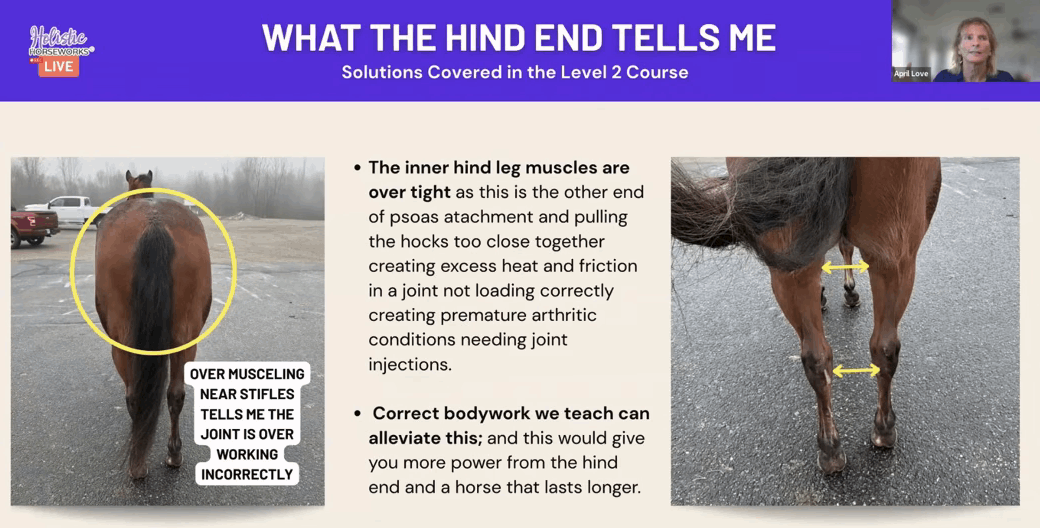
Rather than viewing the hoof problem, hind-end lameness, difficulty with one lead, and sensitivity to touch as completely separate issues, April explores how the horse is using his entire body and where one area may be compensating for another.
This whole-horse perspective is one of the central lessons of the episode.
Where your horse shows discomfort isn’t necessarily the only place worth examining.
High-Low Hooves, Cracking and Uneven Hoof Growth
Stetson’s hooves are another major part of his story.
Tia had struggled with hoof cracking and imbalance despite working with multiple farriers. April discusses high-low hoof patterns, hoof loading, posture, and how the horse uses each leg as part of her assessment.
Instead of looking only at how the hoof can be trimmed differently, April encourages owners to consider why the horse may continually load one limb differently from another.
If the same hoof repeatedly grows differently, cracks, flares, or develops an imbalance, she believes it is worth looking above the hoof and considering what is happening throughout the rest of the body.
First Rib, Shoulders and Movement
April also spends time discussing the first rib and shoulder area, an important part of her Holistic Horseworks approach.
She explains what she looks for when a horse has differences between the shoulders, front legs, hoof loading, or movement patterns.
In Stetson’s case, this becomes part of a much larger evaluation that includes both his front and hind end rather than treating his previous lameness as an isolated leg problem.
The episode allows viewers to see how April follows these patterns through the body and why she believes addressing multiple connected areas can be important when a horse has experienced recurring issues.
Could Old Trauma Still Affect Your Horse?
A horse’s history matters too.
April discusses pullback trauma and cranial compression and explains what she looks for around the head, poll, neck, and surrounding structures.
An accident that happened years earlier may be easy to forget, particularly when the horse appears to recover at the time. But April’s approach includes considering previous falls, pullback incidents, injuries, and other physical events when evaluating the patterns she sees today.
This is why knowing your horse’s history can be valuable when trying to understand recurring movement, posture, or performance changes.
From Biting and Kicking to Enjoying Bodywork
One of the most striking parts of Stetson’s story is the change Tia describes after she began using April’s home-study techniques.
This was a horse who had previously become so sensitive that he would bite or kick when someone tried to work on his body.
Tia says he later became comfortable with being touched and began enjoying his bodywork and hoof soaks. His movement improved, and she was able to return to riding him and loping both leads.
For April, the behavioral change matters too.
Biting, kicking, resisting touch, or becoming difficult during bodywork aren’t automatically behaviors she wants owners to dismiss as attitude. She encourages them to consider when the behavior happens, where the horse is being touched, and whether discomfort could be part of the picture.
How Can You Help Your Horse Stay Sound for Life?
There isn’t one technique, supplement, trim, or treatment that guarantees a horse will remain sound for life.
Instead, April encourages owners to become students of their own horses.
Notice how your horse stands. Watch how the hooves grow. Pay attention to changes in movement. Don’t automatically dismiss biting, kicking, resistance, or sensitivity as bad behavior. Remember previous injuries and accidents. And pay attention when the same issue keeps returning.
Tiki’s longevity and Stetson’s journey back to riding show why April believes proactive, whole-horse care should begin long before a horse reaches old age. Tiki is still being lightly ridden at 30, while Stetson was able to return to riding after years of challenges.
Watch the Full Holistic Horseworks Live Episode
If you’re dealing with horse lameness, hoof cracking, high-low hooves, body sensitivity, biting, kicking, difficulty with one lead, unexplained movement problems, or you’re simply looking for ways to help your horse remain comfortable and active as they age, watch the full episode.
You’ll hear Tiki’s recovery story, follow Stetson’s journey from years of unresolved issues back to riding, and learn how April approaches holistic horse health from head to hoof.
Watch the full episode to learn how you can become more proactive about your horse’s health, soundness, comfort, and longevity.
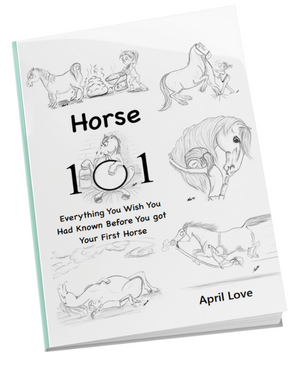
You’ll also get a glimpse into April’s signature Holistic Horseworks programs, clinics, and free resources—including the Horse 101 eBook and dozens of YouTube tutorials.
🍎 Ready to Start Helping Your Horse?
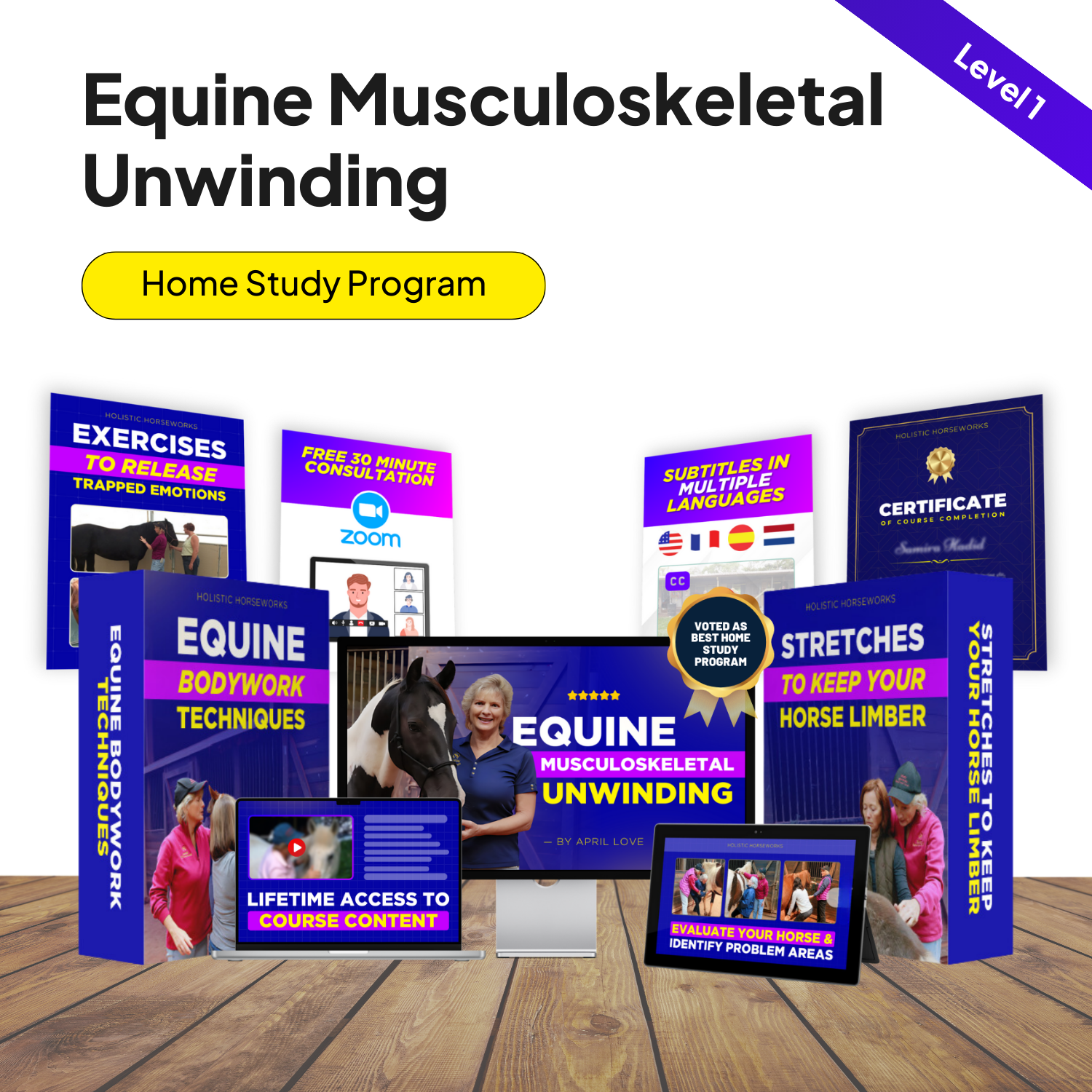
Start with April’s foundational training, Equine Musculoskeletal Unwinding, available to learn online with live 1:1 support. This step-by-step course teaches you how to release deep patterns of imbalance and pain—so your horse can move, feel, and live better.
Whether your horse is showing signs of discomfort or you simply want to deepen your connection and care, this program puts powerful tools in your hands.
Includes video lessons, downloadable workbooks, and a personalized distance reading from April herself.
Rather learn in-person?
Check out our hands-on equine remedial therapy clinics, available all over the globe →
More Holistic Horse Care Education
Horses That Roar and How To Avoid Tie Back Surgery
Ruger struggled to breathe on hills and was diagnosed with grade-three roaring, with surgery being considered. Watch April Love evaluate his cranial structures, first
How to Keep Your Horse Healthy, Sound & Rideable for Life
From a 30-year-old endurance horse recovering from a sudden illness to a 10-year-old horse with years of unexplained lameness, pain, hoof problems, biting, and
Why Your Horse’s Neck is Stiff: Pullback Trauma & the First Rib
Why does your horse have a stiff neck, bite when saddled, or keep developing problems elsewhere in the body? Watch April Love evaluate two
Young Horse Care: Hoof Imbalances, Cranial Compression, Posture & Behavior
Why does your young horse toss their head, stand unevenly, or develop high-low hooves? Watch April Love evaluate two young horses and explore how
Why Your Horse’s Lameness, Spooking & Hoof Problems Keep Coming Back
Is your horse dealing with recurring lameness, spooking or hoof problems? Watch April Love explain how body imbalances and compensation patterns may be connected.
Your Health Now: May 27th, 2026
Chronic pain, nerve issues, jaw tension, recurring soreness, hormone imbalance, and fatigue often seem like separate problems. But what if they're connected? In this episode
Stetson’s Transformation: What Aggressive Horses May Be Trying to Tell You
Pinned ears, biting, kicking, and explosive reactions are often labeled as behavior problems, but what if the horse is actually in pain? In this
How Tiki Is Still Trail Riding at 30: Holistic Horse Care, Craniosacral Work, and Supporting Senior Horses Naturally
Most horse owners expect horses to slow down dramatically with age, but Tiki is still lightly trail riding at 30. In this Holistic Horseworks

Protected: Your Health Now: April 15th, 2026
There is no excerpt because this is a protected post.
Sign Up for Our Newsletter
![Complete Level 1 & Level 2 Home Study + Private Training Package [NO DVD]](https://holistichorseworks.com/wp-content/uploads/2022/08/Level-1-and-Level-2-complete-home-study-and-training-package-400x400.jpg)
![Level 1 "Equine Musculoskeletal Unwinding" Home Study -Watch Instantly [NO DVD]](https://holistichorseworks.com/wp-content/uploads/2022/08/Level-1-Home-Study-400x400.jpg)
![Level 2 “CranioSacral Unwinding & Advanced Applied Kinesiology” Home Study - Watch Instantly [NO DVD]](https://holistichorseworks.com/wp-content/uploads/2022/08/Level-2-Home-Study-400x400.jpg)
![Equine CranioSacral Energy Work -Watch Instantly [English and French]](https://holistichorseworks.com/wp-content/uploads/2022/09/equine-cranial-sacral-energy-work-watch-instantly-400x400.jpg)