
Why Your Horse’s Lameness, Spooking & Hoof Problems Keep Coming Back
Share This Post:
If your horse keeps experiencing recurring lameness, spooking, uneven hoof growth, stiffness, or performance problems, the issue may involve more than the area where the symptoms appear.
You treat the sore leg. Call the farrier about the hoof. Give your horse time off. Try bodywork or chiropractic care.
Things improve for a while, but then the problem comes back.
In this episode of Holistic Horseworks Live, equine bodywork expert April Love works with Dana and her former high-performance hunter, whose history includes spooking and bolting under saddle, uneven movement, hoof imbalances, stiffness, and a serious hind-end injury.
Despite veterinary care, rehabilitation, chiropractic work, Masterson Method, shockwave therapy, and other treatments, Dana still felt something was being missed.
April takes a whole-horse approach, looking beyond individual symptoms to explore how the hooves, first rib, shoulders, pelvis, poll, TMJ, cranial structures, and movement may be connected.
When Horse Lameness Keeps Coming Back
Recurring horse lameness does not always mean the problem begins where the horse appears sore.
During the evaluation, April identifies several areas she believes may be contributing to this horse’s compensation patterns, including differences in his hips, shoulders, forelegs, hooves, and soft tissues.
She explains how tension around the foreleg and intercostal area may place additional strain on the tendons and suspensories, while restriction around the first rib can interfere with normal shoulder movement.
Instead of looking at each symptom separately, April looks at how the horse is using and compensating through the entire body.
What Your Horse’s Hooves Can Tell You
Long toes and low heels. Uneven hoof angles. Flares. Contracted heels. An off-center frog.
These horse hoof problems can provide useful clues about how a horse is standing and loading their body.
In this episode, April compares all four hooves and explains why she doesn’t look at hoof balance separately from body alignment.
How a horse stands and loads each leg can influence how the hoof grows. At the same time, an imbalanced hoof may make it harder for the horse to maintain changes made elsewhere in the body.
This work blends:
-
Myofascial release and cranial decompression
-
Hoof analysis and posture evaluation
-
Energy meridian sweeps and intuitive listening
-
A unique “horse yoga” protocol that supports alignment and self-healing
For April, improving horse movement means looking at the hooves and the body together.
Could Old Trauma Affect Your Horse’s Movement and Behavior?
Sometimes a horse’s current problems may be connected to something that happened years earlier.
April points out signs she associates with previous pullback trauma and discusses how she believes pressure and restriction around the poll and cranial structures may influence the way a horse carries and uses their head.
This becomes particularly interesting when Dana describes her horse’s history of spooking and unpredictable behavior under saddle.
Although he knows his surroundings, he can suddenly become extremely nervous. Dana has also noticed that he becomes calmer when someone walks beside him and will sometimes reach toward her hand as though checking that she is still there.
April explores whether physical restrictions around the head, poll, TMJ, and surrounding structures could be another piece of the puzzle.
Understanding Compensation Patterns in Horses
A problem in one part of the horse’s body can change how other areas are being used.
If a shoulder isn’t moving freely, surrounding muscles may compensate. If the horse carries too much weight over the front end, other structures may take on additional strain. Tightness through the pelvis or groin can also change how a horse stands and loads a hoof.
Over time, these compensation patterns in horses may show up as stiffness, shortened strides, recurring lameness, hoof imbalance, difficulty with a canter lead, or changes in performance.
That’s why April’s holistic horse care and equine bodywork approach evaluates the horse from nose to tail and hoof to withers, rather than focusing only on the latest symptom.
What to Look for in Your Horse’s Posture and Movement
You don’t have to wait until your horse is noticeably lame to start paying attention.
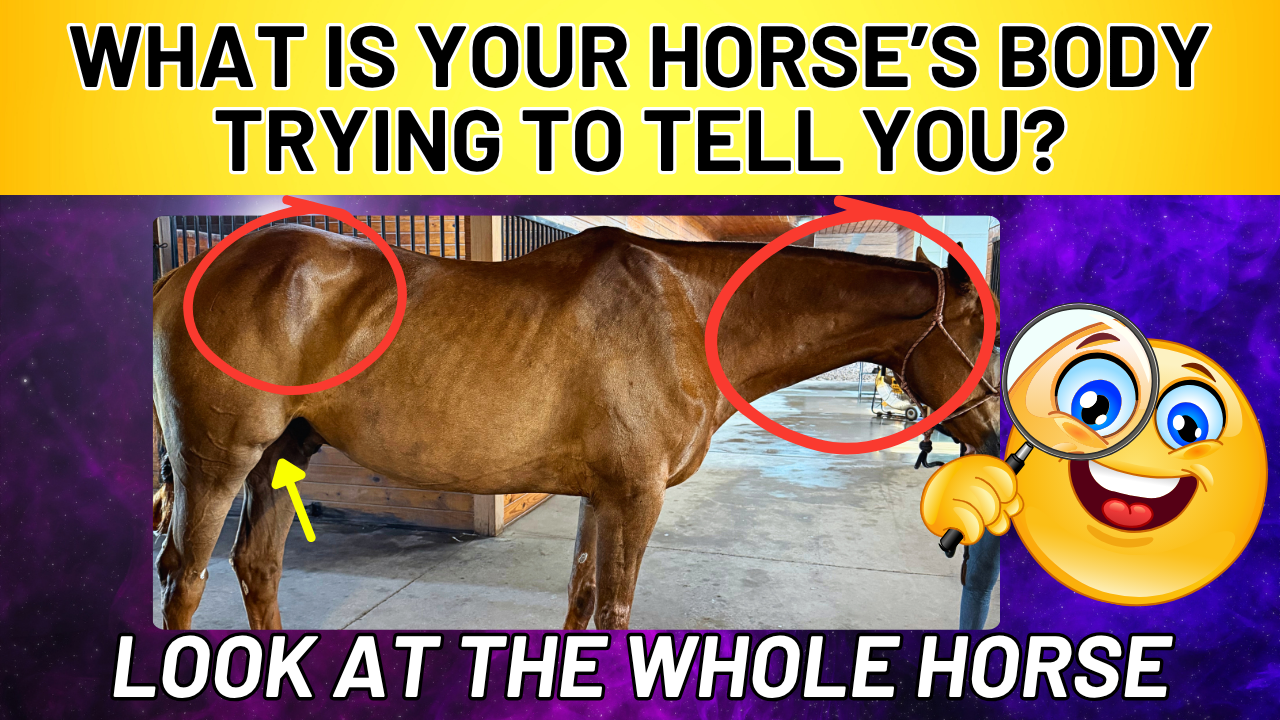
April encourages horse owners to step back and observe the whole horse.
Look at your horse from behind. Are the hips level? Does one shoulder appear different from the other? Are the withers level? Does your horse consistently stand with one hoof forward? Do the hooves look different from each other? Has the mane suddenly started falling differently?
Small changes in horse posture, hoof balance, movement, and behavior may give you clues worth investigating.
In the episode, April demonstrates how she uses these observations to begin putting together a larger picture of what may be happening throughout the horse’s body.
Looking Beyond the Symptoms
When your horse keeps cycling through lameness, spooking, stiffness, hoof problems, or performance issues, repeatedly treating the symptom may not answer the bigger question:
Why does it keep coming back?
This episode gives you an inside look at how April evaluates a real horse using the Holistic Horseworks whole-horse approach, examining the relationships between the hooves, first rib, shoulders, pelvis, poll, TMJ, cranial structures, posture, and movement.
Is your horse showing some of these same signs?
Watch the full evaluation to see how April connects what she sees in the hooves, posture, movement, shoulders, pelvis, poll, and other areas instead of looking at each symptom in isolation.
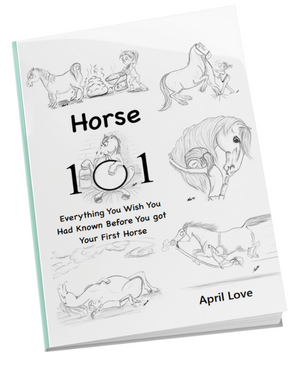
You’ll also get a glimpse into April’s signature Holistic Horseworks programs, clinics, and free resources—including the Horse 101 eBook and dozens of YouTube tutorials.
🍎 Ready to Start Helping Your Horse?
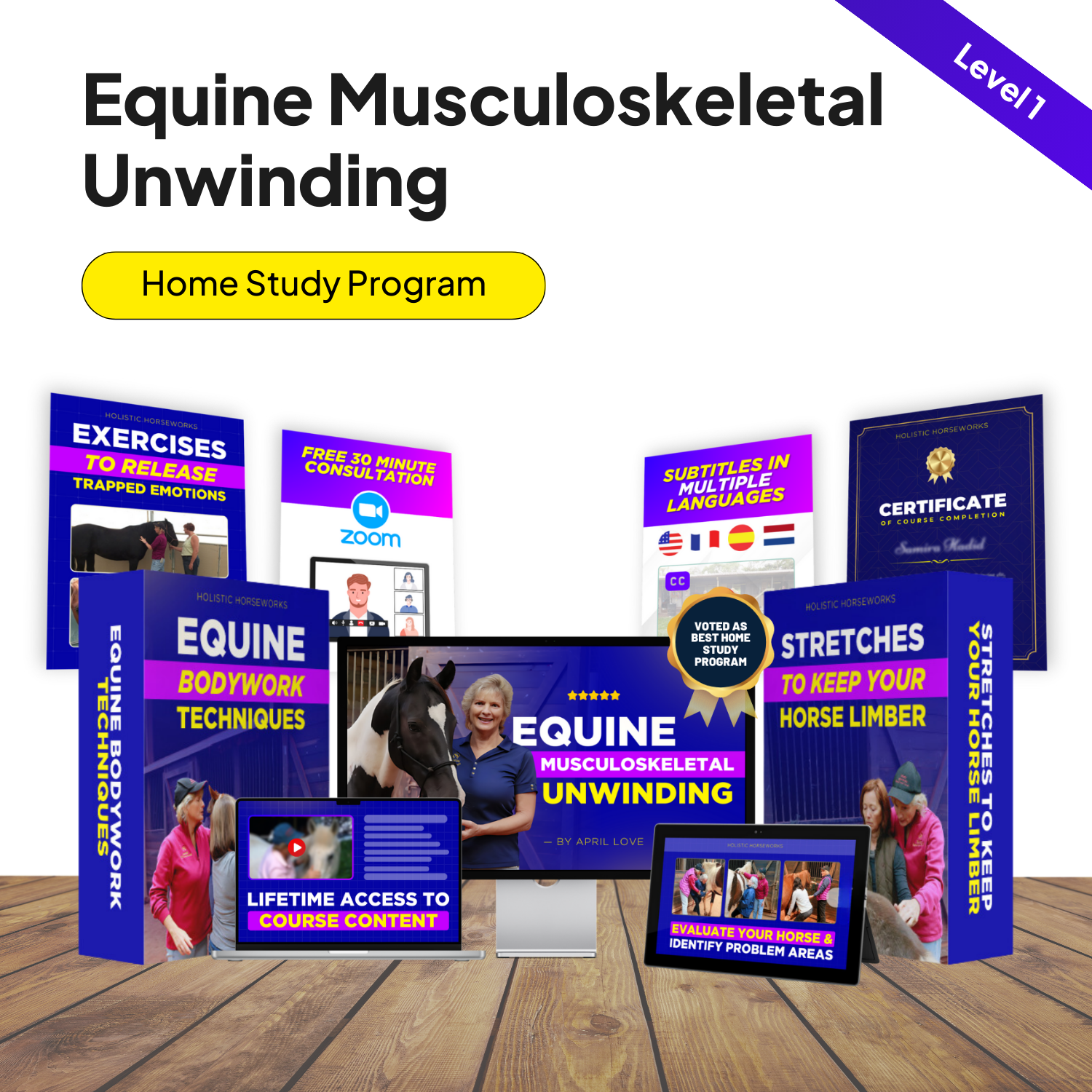
Start with April’s foundational training, Equine Musculoskeletal Unwinding, available to learn online with live 1:1 support. This step-by-step course teaches you how to release deep patterns of imbalance and pain—so your horse can move, feel, and live better.
Whether your horse is showing signs of discomfort or you simply want to deepen your connection and care, this program puts powerful tools in your hands.
Includes video lessons, downloadable workbooks, and a personalized distance reading from April herself.
Rather learn in-person?
Check out our hands-on equine remedial therapy clinics, available all over the globe →
More Holistic Horse Care Education
Horses That Roar and How To Avoid Tie Back Surgery
Ruger struggled to breathe on hills and was diagnosed with grade-three roaring, with surgery being considered. Watch April Love evaluate his cranial structures, first
How to Keep Your Horse Healthy, Sound & Rideable for Life
From a 30-year-old endurance horse recovering from a sudden illness to a 10-year-old horse with years of unexplained lameness, pain, hoof problems, biting, and
Why Your Horse’s Neck is Stiff: Pullback Trauma & the First Rib
Why does your horse have a stiff neck, bite when saddled, or keep developing problems elsewhere in the body? Watch April Love evaluate two
Young Horse Care: Hoof Imbalances, Cranial Compression, Posture & Behavior
Why does your young horse toss their head, stand unevenly, or develop high-low hooves? Watch April Love evaluate two young horses and explore how
Why Your Horse’s Lameness, Spooking & Hoof Problems Keep Coming Back
Is your horse dealing with recurring lameness, spooking or hoof problems? Watch April Love explain how body imbalances and compensation patterns may be connected.
Your Health Now: May 27th, 2026
Chronic pain, nerve issues, jaw tension, recurring soreness, hormone imbalance, and fatigue often seem like separate problems. But what if they're connected? In this episode
Stetson’s Transformation: What Aggressive Horses May Be Trying to Tell You
Pinned ears, biting, kicking, and explosive reactions are often labeled as behavior problems, but what if the horse is actually in pain? In this
How Tiki Is Still Trail Riding at 30: Holistic Horse Care, Craniosacral Work, and Supporting Senior Horses Naturally
Most horse owners expect horses to slow down dramatically with age, but Tiki is still lightly trail riding at 30. In this Holistic Horseworks
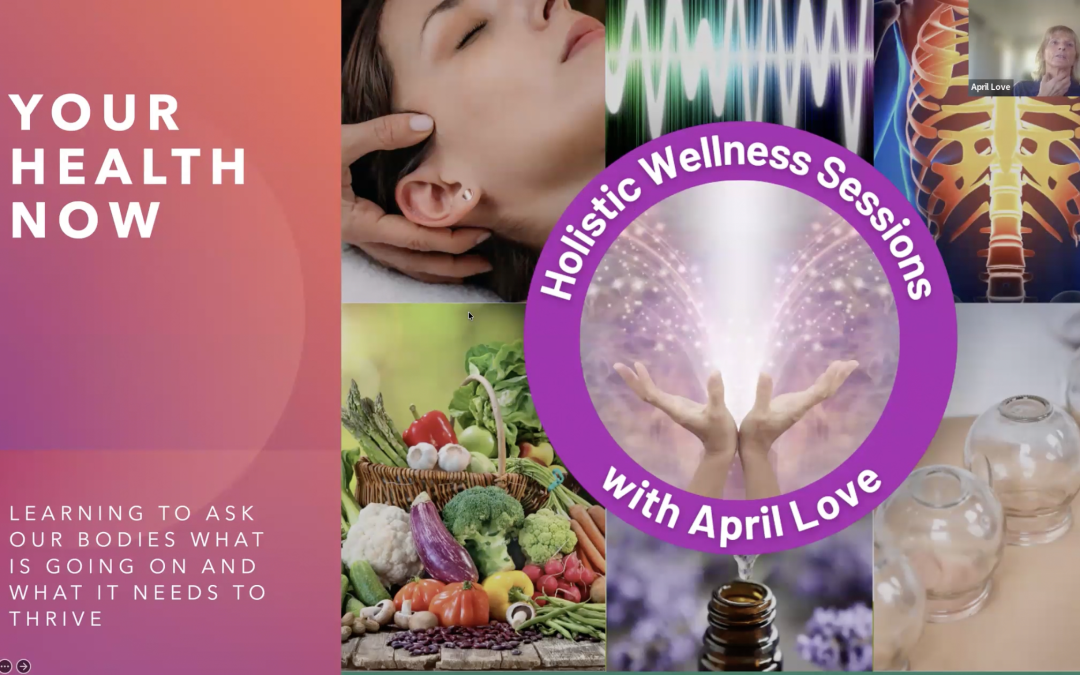
Protected: Your Health Now: April 15th, 2026
There is no excerpt because this is a protected post.
Sign Up for Our Newsletter
![Complete Level 1 & Level 2 Home Study + Private Training Package [NO DVD]](https://holistichorseworks.com/wp-content/uploads/2022/08/Level-1-and-Level-2-complete-home-study-and-training-package-400x400.jpg)
![Level 1 "Equine Musculoskeletal Unwinding" Home Study -Watch Instantly [NO DVD]](https://holistichorseworks.com/wp-content/uploads/2022/08/Level-1-Home-Study-400x400.jpg)
![Level 2 “CranioSacral Unwinding & Advanced Applied Kinesiology” Home Study - Watch Instantly [NO DVD]](https://holistichorseworks.com/wp-content/uploads/2022/08/Level-2-Home-Study-400x400.jpg)
![Equine CranioSacral Energy Work -Watch Instantly [English and French]](https://holistichorseworks.com/wp-content/uploads/2022/09/equine-cranial-sacral-energy-work-watch-instantly-400x400.jpg)